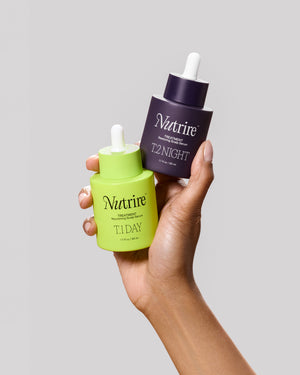

TL;DR: Scalp health is the foundation of every hair outcome. The T1 Day / T2 Night Duo addresses the most common clinical causes of scalp imbalance across a full 24-hour cycle. Here are the questions we hear most, answered by the science.
Most hair concerns trace back to a single source: the scalp. Yet the questions people ask about scalp health rarely get answered with clinical precision. Here is the science behind the five most important scalp care practices, and the answers that will change how you think about your routine.
What is the most important thing you can do for scalp health?
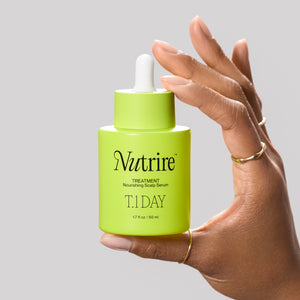
The most important thing you can do for scalp health is identify your scalp type and treat it with clinically targeted products both morning and night. Dry, normal, and oily scalps each have distinct biological needs that generic formulas cannot address. Consistent, type-matched treatment using a DHT-blocking day serum like Nutrire's T1 Day Serum and a barrier-restoring night serum like T2 Night Serum is the foundation of genuine, lasting scalp health.
How do I know what my scalp type is?
Your scalp type is determined by how much sebum your follicles produce. A dry scalp typically feels tight, itchy, or flaky within days of washing. An oily scalp becomes greasy within 24 hours. A normal scalp maintains relative balance between wash days. If you are unsure, Nutrire's scalp quiz, developed with trichologists and estheticians, provides a clinically matched recommendation based on your specific symptoms and history.
Does scalp type affect hair growth?
Yes. An imbalanced scalp environment, whether too dry or too oily, compromises the follicular conditions required for healthy, consistent hair growth. A dry, barrier-depleted scalp is more susceptible to inflammation and DHT accumulation. An oily scalp traps sebum and debris around the follicle, restricting its ability to produce healthy strands. Treating your specific scalp type with matched formulas is the first and most critical step toward improving both scalp health and hair density over time.
Should you use different scalp products in the morning and at night?
Yes. Daytime scalp care should focus on nourishment, DHT protection, and creating the optimal environment for active follicular function. Nighttime scalp care should focus on restoration, barrier repair, and sebum regulation during the body's natural recovery cycle. Using a single product for both states compromises the efficacy of at least one. The T1 Day / T2 Night Duo is specifically formulated to address both biological states with clinical precision.
How long before a 24-hour scalp routine shows results?
Measurable improvements in scalp condition and hair density typically begin within four weeks of consistent use. Hair growth cycles operate over months, so sustained daily use is essential for compounding results. Users of the T1 Day / T2 Night system report visible improvements in fullness and scalp comfort within the first month, with results continuing to build over an eight to twelve week period.
What causes a damaged scalp barrier?
The scalp barrier is most commonly compromised by over-washing, sulfate-based cleansers, environmental stressors, and the chronic use of products that strip natural lipids without replenishing them. Once the barrier is depleted, the scalp loses its ability to retain moisture and regulate oil production, creating a cycle of chronic imbalance that worsens without targeted intervention.
How do you repair a damaged scalp barrier?
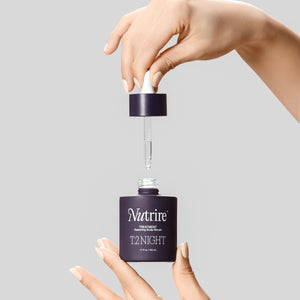
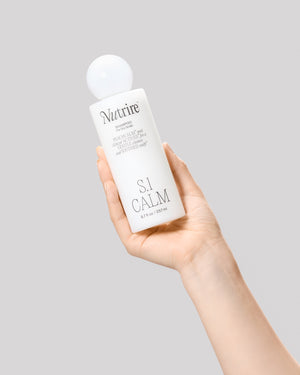
Repairing the scalp barrier requires leave-on treatments that deliver restorative actives directly to the scalp overnight, when the body's cellular repair processes are most active. T2 Night Serum is clinically formulated for overnight barrier restoration, reducing scalp dryness by 45% with consistent use. Pairing it with a sulfate-free shampoo like S.1 Calm prevents further barrier disruption on wash days.
Are sulfates bad for scalp health?
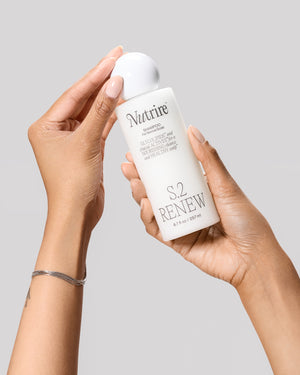
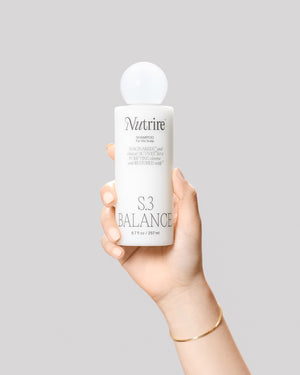
Sulfates (SLS and SLES) are surfactants that cleanse by stripping the scalp of oils indiscriminately. While effective at removing dirt and product buildup, they also remove the natural lipids that protect the scalp barrier. This triggers either compensatory sebum overproduction in oily scalp types or chronic dryness and sensitivity in dry scalp types. Sulfate-free formulas cleanse effectively while preserving the scalp's essential lipid integrity. Nutrire's full sulfate-free shampoo range includes S.1 Calm, S.2 Renew, and S.3 Balance.
How often should you wash your scalp?
Wash frequency should be determined by scalp type. Oily scalp types may need to cleanse every one to two days, while dry scalp types typically benefit from washing two to three times per week at most. Over-washing, regardless of scalp type, disrupts the barrier and worsens sebum dysregulation over time. Using a type-matched sulfate-free shampoo from Nutrire's collection reduces the disruption associated with necessary cleansing.
What is the difference between scalp care and hair care?
Hair care refers to products applied to the strand: shampoos, conditioners, masks, and styling treatments. Scalp care refers to targeted clinical treatment of the scalp itself, the living tissue from which every strand originates. Most routines are heavily weighted toward hair care and neglect scalp care entirely. Nutrire's approach prioritizes the scalp as the origin of all hair health, using the T1 Day / T2 Night Duo as the clinical foundation of a complete routine that works from the root outward.


